
Certified Environmental Management System
Protecting the environment is an important priority for STILL. The company is committed to minimizing the environmental impact of its operations through its HSE management system. Making responsible use of resources and continuously reducing damage to the environment at the local level are a top focus in particular. Its indicator-based approach to environmental management focuses on the areas of energy and greenhouse gas (GHG) emissions, as well as water and waste.
Under the company’s integrated management policy – which covers sustainability, quality, health and safety in the workplace, the environment, and energy – all managers are required wherever possible to: introduce environmentally-friendly and energy-efficient processes and production procedures; reduce waste; use natural resources such as water, land, and raw materials sparingly and responsibly; prevent and reduce contamination of the air, waterways, and soil; and make active efforts to cut GHG emissions. All STILL sites have committed to uphold the Group-wide HSE standard of KION and are also developing specific strategies in line with local requirements. To support these efforts, a designated HSE officer has been appointed for each national subsidiary.
A key sustainability target set out in the corporate strategy of KION is to achieve ISO 14001 (environmental management) certification for all sites. All production locations and almost all sales organizations are now certified in line with the latest environmental standard ISO 14001. Furthermore, the energy management system at the largest sites is certified according to ISO 50001 and/or DIN EN 16247. Regular audits provide transparency around the actions taken and lay the groundwork for continually improving sustainability performance. All relevant energy and environmental management data is also recorded as part of the established HSE management system, thereby supporting effective sustainability management across STILL.
Percentage of Sites Certified under ISO 14001

Energy Management
STILL has set itself the target of increasing energy efficiency and reducing energy consumption per truck. To this end, the company is focusing on renewables and electric vehicles, as well options to optimize the lighting technology in use across its sites. Work has already begun to switch the company’s lighting systems over to LED technology and install motion sensors at workstations. The Group aims for a complete switch to green electricity by 2030. In fiscal 2025, STILL sourced 99 percent of its purchased electricity from renewable sources, both in its plants and in its branches.
STILL has completely refurbished the energy systems at its administrative building in Hamburg and taken advantage of the increased efficiency of the city’s district heating network to significantly improve its energy footprint and cut its greenhouse gas emissions. Responsible use of energy and reduction of energy consumption are also part of the mandatory annual HSE training.
Shorter transport distances are also helping reduce the company’s energy consumption. For instance, customers in the Czech Republic, Slovakia, Hungary, Poland, and Austria are today supplied directly from the warehouse at the new Regional Service Center in Brno in the Czech Republic. The new center has enabled STILL to optimize its transport routes and delivery times and, in doing so, has brought the company closer to its customers as well as further reducing its response times and increasing the availability of its products.
Efforts aimed at conserving energy and using it efficiently go back a long way at STILL. The Hamburg production site obtained its certification according to ISO 50001 (energy management) back in 2013. All of the energy-intensive production locations of STILL are now certified as well and undergo regular audits as part of the current certification cycle.
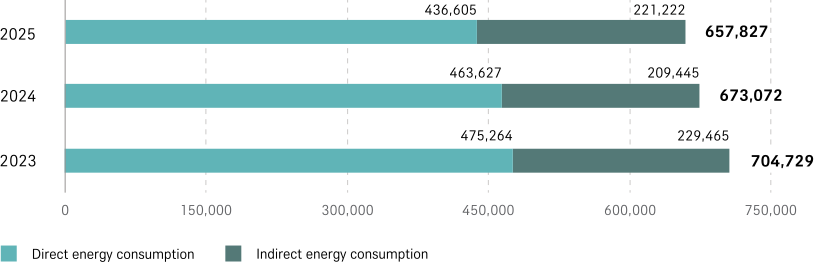
Direct and Indirect Energy Consumption in GJ
|
|
2025 |
|
2024 |
|
2023 |
|---|---|---|---|---|---|---|
Total energy consumption, direct and indirect |
|
657,827 |
|
673,072 |
|
704,729 |
Direct energy consumption |
|
436,605 |
|
463,627 |
|
475,264 |
Diesel (non-renewable) |
|
242,095 |
|
255,999 |
|
258,501 |
Gasoline (non-renewable) |
|
25,639 |
|
23,623 |
|
14,289 |
Heating oil (non-renewable) |
|
16,864 |
|
14,330 |
|
13,892 |
Coke (non-renewable) |
|
36,717 |
|
58,829 |
|
74,874 |
Natural gas (non-renewable) |
|
112,710 |
|
108,830 |
|
111,714 |
LPG (non-renewable) |
|
544 |
|
697 |
|
709 |
Biodiesel (renewable) |
|
384 |
|
0 |
|
0 |
Bioethanol (renewable) |
|
25 |
|
0 |
|
0 |
Hydrogen (renewable) |
|
7 |
|
0 |
|
0 |
Self-generated solar power (renewable) |
|
1,621 |
|
1,319 |
|
1,285 |
Indirect energy consumption |
|
221,222 |
|
209,445 |
|
229,465 |
Electricity |
|
157,635 |
|
155,708 |
|
164,955 |
Heat |
|
63,587 |
|
53,737 |
|
64,509 |
Water
STILL ensures that all machinery in use at its premises meets the criteria set out in the German ordinance on industrial health and safety (BetrSichV) and the ordinance on installations for handling water-polluting substances (AwSV). It also carries out regular inspections and monitoring of this machinery.
The company’s sites around the world have measures in place to reduce water withdrawal, such as water-saving units in sanitary facilities and instructions that company vehicles only be washed when strictly necessary. In addition, the powder-coating systems used in the plants of STILL are state of the art and generate less wastewater. Automated processes and technologies help reduce environmental pollution by recirculating and reprocessing the water for pretreatment. Used process water from production is separated and subjected to chemical-physical treatment before being reintroduced into the natural water cycle.
The operations of STILL have very little impact on water quality, to the extent that – other than the use of oil water separators – the wastewater needs no additional treatment prior to disposal. Nonetheless, STILL commissions regular external analyses at some of its locations in order to monitor its wastewater.
|
|
2025 |
|
2024 |
|
2023 |
|---|---|---|---|---|---|---|
Total water volume |
|
78,910 |
|
118,314 |
|
121,130 |
Groundwater |
|
450 |
|
440 |
|
450 |
Municipal water supply |
|
78,460 |
|
117,874 |
|
120,679 |
Other sources |
|
0 |
|
0 |
|
1 |
Climate Protection
As part of international efforts to limit global warming and address the many challenges associated with climate change, STILL and its partners must also take proactive and forward-thinking action to protect the world’s climate. STILL works closely with its customers, suppliers, and business partners in many different areas – including energy consumption, efficient use of resources, and mitigation of GHG emissions – to ensure that it is making a difference within its own operations and beyond.
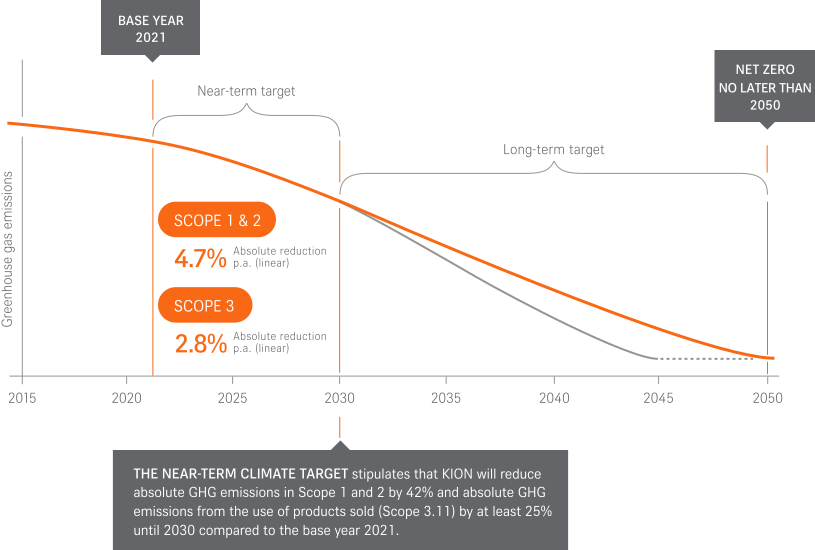
KION’s climate and energy management policy is based on the 2015 Paris Agreement, which aims to limit global warming to 1.5°C above pre-industrial levels on a cross-sector basis. After setting initial climate targets in 2018 and carrying out a comprehensive strategy review starting in 2021, KION made a public commitment in 2023 to achieve net-zero GHG emissions across its entire value chain by 2050 at the latest. In 2024, the Science Based Targets initiative (SBTi) has formally validated the short-term climate targets and net-zero target of KION (see “Key Targets”). All of the Group’s stated GHG targets are gross targets and do not include negative GHG emissions, CO2 offsets, or avoided GHG emissions as a means of achieving the GHG emissions reduction targets.
The Group has put in place a comprehensive climate management system to ensure effective and efficient management of GHG emissions and energy use, including the promotion of renewable energies. This system covers the company’s own operations as well as upstream and downstream activities within the value chain, from purchasing and production to use and reuse at the end of the life cycle. The internationally recognized standards of the Greenhouse Gas Protocol (GHG Protocol) serve as the methodological basis for recording and controlling GHG emissions.
KION intends to make future investments in order to achieve the strategic targets related to climate protection and adaptation to climate change. The timing and scope of such investments are currently in the planning phase. Further details are to be provided in a transition plan for fiscal 2026.
GHG Emissions in kg CO2eq
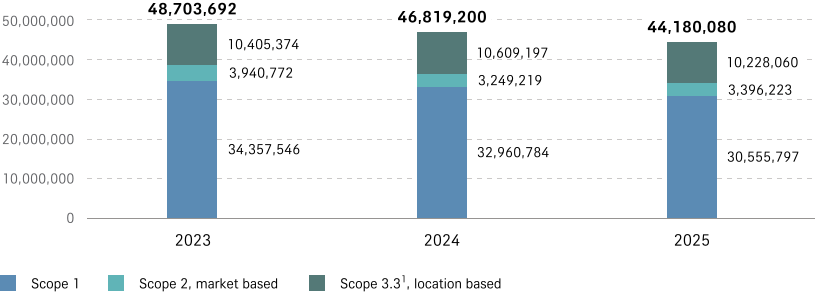
|
|
2025 |
|
2024 |
|
2023 |
||||
|---|---|---|---|---|---|---|---|---|---|---|
Scope 1 |
|
30,555,797 |
|
32,960,784 |
|
34,357,546 |
||||
Scope 2, market based |
|
3,396,223 |
|
3,249,219 |
|
3,940,772 |
||||
Scope 3.31, location based |
|
10,228,060 |
|
10,609,197 |
|
10,405,374 |
||||
Total emissions |
|
44,180,080 |
|
46,819,200 |
|
48,703,692 |
||||
|
||||||||||
Climate Protection Measures for CO2 Reduction
To reduce GHG emissions from its own operations (Scope 1), STILL is gradually replacing combustion engine vehicles in its service and company vehicle fleet with electric vehicles. In fiscal 2025, this concept for quieter and more sustainable mobility was systematically advanced throughout the EMEA region. The target is electrification across the entire vehicle fleet – from company cars to service vans. To this end, a practical and future-proof e-mobility concept was first developed for Germany, which is to be implemented nationwide in 2026 and serves as a blueprint for the entire EMEA region. The basis was a detailed analysis of charging options at home, at work, on the road, and at the customer’s premises, as well as the necessary infrastructure. To ensure the operational capability of electric vans, particularly in the service business, technical and regional requirements regarding range, payload, and charging times of the relevant vehicle types were carefully examined. This decarbonization approach in Scope 1 is closely linked to the reduction of GHG emissions in Scope 2, as fleet electrification goes hand in hand with increased use of renewable energy in the company’s own operations (see “Energy Management”).
In Switzerland, STILL collaborates with DKV Mobility. Since 2022, more than 90 percent of vehicles have been refueled via the DKV Climate Card, with the emissions generated during fuel consumption being offset through certified climate protection projects. At the Nordic locations in Denmark, Sweden, and Norway, a company car policy has also been in effect since 2022 that permits only hybrid and electric vehicles. Work has already begun in Benelux to electrify the vehicle fleet, and the transition to electric is also being reviewed and gradually expanded at many other locations. To complement this process, the charging infrastructure has also been expanded, and all main locations in Germany have now been equipped with e-charging stations since 2024.
Modernization work at the Hamburg plant in 2023 saw the replacement of two CO2 laser cutting systems in sheet metal production with significantly more efficient fiber laser systems. This not only reduces electricity consumption but also generates additional CO2 savings, as the new systems no longer use gas to generate the laser beam.
The STILL team took part in the “Stadtradeln” 2025 cycling campaign – for climate protection and for better cycling infrastructure in Hamburg – and came in third place in the corporate ranking. More than 254 employees covered 67,653 kilometers, setting a new team and distance record. This resulted in a saving of approximately 11 t CO2eq. Another measure to promote emission-free commuting is the expansion of bicycle parking facilities at the Hamburg location: A total of 250 covered bicycle parking spaces are available on two levels. It is also possible to charge e-bike batteries at a smart charging station. To further promote sustainable mobility, all German KION companies offer their employees the opportunity to use a portion of their gross pay to lease a bicycle, which they can then use outside of their commute as well.
In addition to actively reducing its own emissions, the company of STILL in Switzerland also offsets GHG emissions through the use of carbon credits and supports a selected climate protection project. The supported project generates renewable energy from sawdust produced during the production of raw material for paper manufacture. The sawdust is used as biomass for generating steam, which in turn serves as an energy source for the production of more raw materials. This regenerative system therefore enables fossil energy sources to be replaced as a heat source. The biomass project is one of the few climate protection projects in Europe to have been awarded the “Gold Standard” by Swiss Climate.
From 2026 onward, the Swiss company plans to use electric trucks for deliveries to customers, thereby replacing the previous compensation via climate credits with a direct reduction of emissions in its own operations.
Additional Emissions Monitoring
Most of the premises of STILL are located in industrial areas where there are no local residents. Ongoing checks and measurements have confirmed that no external soundproofing is required; however, STILL does have internal noise reduction measures in place. Noise levels are assessed across all workplaces and the health and safety and environmental protection department maintains and regularly updates a register of noise measurements taken. Risk analyses are conducted to identify the most effective measures to protect employees against noise-induced hearing loss, including warning signs displayed across all production sites and ear defenders supplied free of charge. Acoustic enclosures are also erected around loud machinery and soundproofing walls installed.
Filter systems are installed at relevant sites to limit the emissions generated by our plants with the aim of protecting the environment as well as our own employees from exposure to hazardous substances. The iron foundry of STILL, Eisengießerei Dinklage GmbH, is an example of a plant that is equipped with highly effective filter systems to reduce the amount of fine dust emitted into the atmosphere to an unavoidable minimum.
Other Significant Air Pollutant Emissions in kg

|
|
2025 |
|
2024 |
|
2023 |
||||
|---|---|---|---|---|---|---|---|---|---|---|
Other significant airborne emissions – total |
|
1,173,383 |
|
1,709,706 |
|
1,928,112 |
||||
Carbon monoxide (airborne emissions, CO) |
|
1,144,960 |
|
1,675,653 |
|
1,884,679 |
||||
Nitrogen oxides (NOx) |
|
4,523 |
|
3,270 |
|
3,678 |
||||
Sulfur oxides (SOx) |
|
1,0491 |
|
1,0191 |
|
5,141 |
||||
Volatile organic compounds (VOCs) |
|
22,145 |
|
29,104 |
|
34,220 |
||||
Particulate matter (PM) |
|
704 |
|
658 |
|
386 |
||||
Other airborne emissions |
|
2 |
|
4 |
|
8 |
||||
|
||||||||||
Efficient Use of Resources
At STILL, efficient use of resources is viewed as a holistic approach that aims to optimize the use of industrial trucks and components throughout their entire life cycle, to systematically return materials through maintenance, reuse, and recycling, and to minimize waste.
Another important focus for STILL in terms of using resources responsibly is to find ways to replace critical materials and hazardous substances with less critical and less hazardous alternatives. This applies to both raw materials and the operating materials used in production that are not part of the end product itself. For example, in 2024 a protective coating system for printed circuit boards was replaced after the manufacturer reclassified it as a CMR substance. In 2025, the coolant for the products was also changed to a less harmful product. This conscious handling of hazardous substances protects customers, employees, and the environment alike.
Waste prevention is right at the top of the waste hierarchy. To this end, STILL has installed reusable systems in various areas to help reduce waste. For example, the majority of spare parts supplied to individual sites and technicians in several European countries are handled via the reusable system. In countries where this is not possible, cardboard packaging and other materials are reused to conserve important resources and prevent waste.
Employees can also help reduce waste. The company canteen at STILL in Hamburg is participating in the RECUP and REBOWL initiative, Germany’s largest reusable packaging system for takeout food and drink. Furthermore, an employee idea was implemented in 2025 so that the coffee machines at headquarters no longer dispense disposable cups.
Where it is not possible to completely avoid waste, STILL places the utmost importance on high-quality recycling, either through its own plant or partner organizations. For years, STILL has been reprocessing scrap at its own iron foundry to make new counterweights for its forklift trucks, thus making an important contribution to implementing the circular economy. Under the Group-wide HSE Standard, all local Group companies – including STILL – must have processes in place for recycling and re-using their waste.
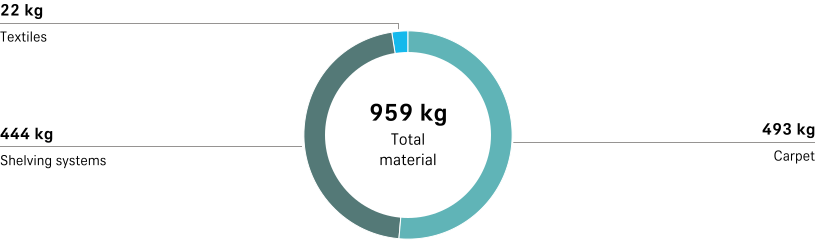
Resource conservation and CO2 reduction also play an important role even at the planning stage of events such as trade fairs. For example: At LogiMAT 2025, STILL once again thoroughly reviewed and optimized its planned trade fair presence in advance. Regional procurement, waste reduction, and social and ecological criteria were the main focus for partners and suppliers, with a particular focus on reusing the trade fair stand. What began as a pioneering achievement the previous year is now an integral part of the STILL trade fair concept – collaboration with the Leipzig-based company Trash Galore GbR, which passes on non-reusable materials from the exhibition stand to non-profit organizations. In 2025, around 959 kg of material – including over 493 kg of carpet, 444 kg of shelving systems, and 22 kg of textiles – was donated to Kunstverein Wagenhalle e. V., Jugendfarm Sindolino, Stuttgarter Jugendhaus, and Lederschmiede. The partnership was thus able to reuse valuable resources and save over 4,000 kg CO2eq, while supporting the important work of the charitable projects taking part.
Recyclable Materials Donated from the Trade Fair Stand in Partnership with Trash Galore in 2025
For production waste, STILL in Hamburg works exclusively with qualified waste disposal companies that use the following recycling processes:
Recycling and recovery of organic waste
Reprocessing of sludge and residue from kitchen grease trap
Recycling of food waste from the company canteen via ReFood
Recycling and recovery of inorganic waste – i.e. reprocessing of slurry and emulsion from operating processes
Waste exchange, so that the waste can be processed – for example, conditioned or dried – and inputted into another end recycling or recovery system
Hazardous and Non-hazardous Waste for Recycling/Re-use in t in 2025
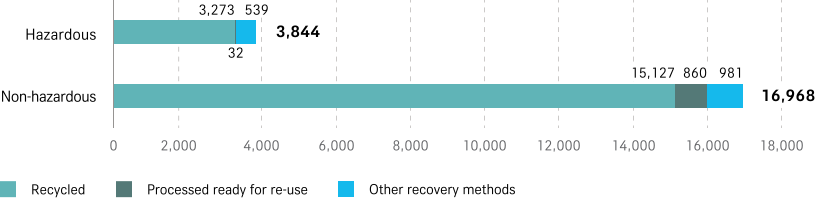
|
|
2025 |
|
2024 |
|
2023 |
|---|---|---|---|---|---|---|
Hazardous waste for recycling/re-use |
|
3,844 |
|
4,280 |
|
3,542 |
Recycled |
|
3,273 |
|
3,878 |
|
2,762 |
Processed ready for re-use |
|
32 |
|
22 |
|
66 |
Other recovery methods |
|
539 |
|
380 |
|
714 |
Non-hazardous waste for recycling/re-use |
|
16,968 |
|
15,288 |
|
16,558 |
Recycled |
|
15,127 |
|
13,618 |
|
14,989 |
Processed ready for re-use |
|
860 |
|
874 |
|
655 |
Other recovery methods |
|
981 |
|
796 |
|
914 |
Hazardous and Non-hazardous Waste for Disposal in t in 2025
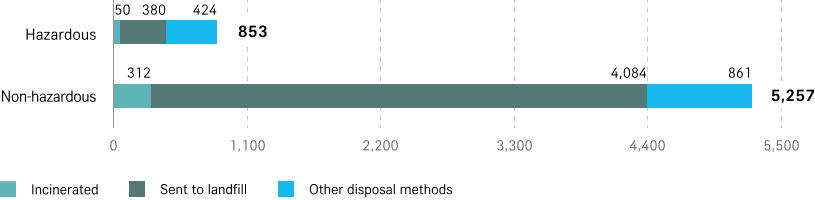
|
|
2025 |
|
2024 |
|
2023 |
|---|---|---|---|---|---|---|
Hazardous waste for disposal |
|
853 |
|
981 |
|
1,049 |
Incinerated |
|
50 |
|
52 |
|
52 |
Sent to landfill |
|
380 |
|
473 |
|
639 |
Other disposal methods |
|
424 |
|
457 |
|
359 |
Non-hazardous waste for disposal |
|
5,257 |
|
6,983 |
|
4,926 |
Incinerated |
|
312 |
|
350 |
|
217 |
Sent to landfill |
|
4,084 |
|
5,692 |
|
3,734 |
Other disposal methods |
|
861 |
|
941 |
|
975 |
|
|
2025 |
|
2024 |
|
2023 |
|---|---|---|---|---|---|---|
Hazardous waste |
|
4,697 |
|
5,261 |
|
4,591 |
Non-hazardous waste |
|
22,225 |
|
22,271 |
|
21,484 |
Total waste for disposal |
|
611 |
|
7,964 |
|
5,975 |
Total waste for recovery |
|
20,812 |
|
19,568 |
|
20,100 |
Further Initiatives
The mandatory HSE training completed by staff each year covers a range of environmental, climate, and energy management topics that are relevant for the business, including energy consumption, water usage, waste separation, and the risks posed by climate change.
Percentage of Sites Where Employees Received Training on Environmental Topics as Part of HSE Training

In addition to the training, campaigns are also run to raise awareness of current issues. For example, in 2024 employees in Spain were given intensive training in water conservation in response to the ongoing drought in Catalonia and Andalusia.
The increased awareness of environmental issues among staff can be seen in the environmental initiatives organized across the business:
Nearly all units of the business are now working within the framework of the ISO 14001 certification, with the remaining sites set to follow in 2025.
Every year at Easter, the “Recycling Bunny” visits employees in Switzerland with ideas, tips, and suggestions relating to sustainability and health.
STILL has been contributing to biodiversity in Hamburg by hosting a bee colony on its premises for the past six years. In Denmark, green spaces are also no longer being mowed to preserve insect habitats.
Idea Management
Idea management – i.e. the process of collecting suggestions from all staff in order to continually improve the business – has been a central fixture in the company culture of STILL for many years. Quality standards, productivity, and employee satisfaction are thus improved across the company based on the insights and experiences of the staff as a whole. The aim is to leverage untapped potential for improvement and incorporate these areas into the ongoing improvement process for the entire product and service portfolio, which comprises both production and work processes as well as working conditions, including health and safety and environmental protection. Ideas for improvement are assessed by an expert in the relevant field against a defined set of criteria and given a score, with prizes awarded for the best-scoring ideas.
One example is the idea submitted in the reporting year at headquarters in Hamburg for reusing squared timber. The wooden beams used as loading aids and previously disposed of will, according to the idea, be collected after use and reused. With implementation planned for 2026, it is expected that approximately 2,900 pieces of squared timber per year can be saved; this corresponds to approximately 27.84 m3 of wood.
As part of an idea management campaign focused on ecological sustainability in 2023, various employee ideas were implemented, and these were also continued in fiscal 2025. These include cutting the volume of plastic waste associated with the delivery of cylinders to production sites by working together with the supplier to have the cylinders delivered in bundles, thereby reducing the amount of plastic packaging. The number of printed delivery notes for spare parts was also reduced from two copies to one, saving a large amount of paper and toner in the process.
Furthermore, the use of plastic quick-seal bags in production has been discontinued since 2023. Production orders that were previously passed on in such bags have since been passed along in the process without plastic packaging.
A socially sustainable initiative was also continued in 2025: Regional fruit is harvested and processed into fruit juices by people with disabilities or by socially disadvantaged people; the juices are then available to employees in the canteen at the headquarters in Hamburg.